
Articles


Montana’s Plan To Ban TikTok Is A Preview For The Rest Of The Country
Coal power generation, disproportionately burdened with heavy costs and regulations, dipped slightly last year. “Federal clean energy tax credits are accelerating a nationwide wave of coal plant closures, as those facilities can no longer economically compete,” reports the Hill. Renewables, which owe their leaping abilities to taxpayer subsidies, still lag way behind natural gas.
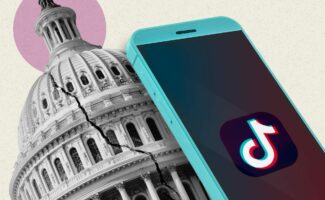
Biden and Congress want to ban TikTok but at this point it may be impossible
If divestiture fails, the Biden administration has indicated it will seek to impose a direct ban on TikTok. But it would first need a big assist from Capitol Hill. When federal judges blocked the Trump administration’s TikTok ban in 2020, they did so in part based on violations of the Berman amendments — obscure but important 30-year-old provisions in the International Emergency Economic Powers Act that allow for the free flow of “informational material” from adversarial nations.

The US is greening itself toward more dependence on China
Coal power generation, disproportionately burdened with heavy costs and regulations, dipped slightly last year. “Federal clean energy tax credits are accelerating a nationwide wave of coal plant closures, as those facilities can no longer economically compete,” reports the Hill. Renewables, which owe their leaping abilities to taxpayer subsidies, still lag way behind natural gas.
How the CHIPS Act Can Impact Arkansas
A series of major manufacturing investments have steadily been announced over the past two years, like Samsung’s plan to build a $17 billion semiconductor factory in Texas, and Intel’s goals to establish $20 billion operations in both Arizona and Ohio. Micron recently announced a $20 billion facility planned for New York. This has left many of us wondering, what about Arkansas?

TikTok CEO admits the app is tracking American users’ key strokes
At a House Committee on Energy and Commerce hearing, the CEO of the Chinese company TikTok, Shou Zi Chew, admitted that the app is tracking American users keystrokes.
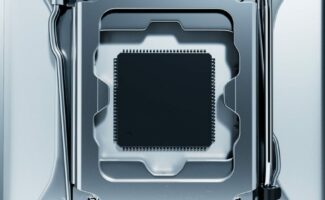
I Saw the Face of God in a TSMC Semiconductor Factory
TSMC’s success is built on its singular comprehension of this dispersion of providential gifts. The firm is merrily known as “pure play,” meaning all it does is produce bespoke chips for customer companies.

Bipartisan TikTok bill is better than an outright ban, sponsors argue
The future of the RESTRICT Act is unclear, but with bipartisan support and Biden’s backing, it is the leading legislation at the moment. “Momentum is strong and continues to build rapidly every day. The legislation, as always, will have a few twists and turns,” Krach said.
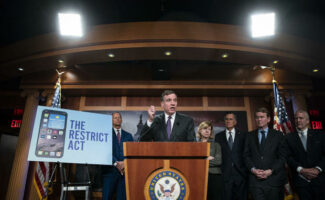
Democrats come around on TikTok ban, reflecting willingness to challenge China
The showdown over a Chinese surveillance balloon that drifted over the U.S. before being shot down off the coast of South Carolina last month only heightened calls in Congress for action against TikTok and foreign adversaries over technology that could be used to spy on Americans.

Webinar: Huawei & 5G investment in SAUDI ARABIA
On March 2nd at 1:00 pm EST, the Krach Institute for Tech Diplomacy at Purdue will host a webinar to discuss Saudi Arabia’s new deal with Huawei to adopt 5G technology across the country. The panelists will evaluate the implications of this decision on U.S. national security, economic relations, and technology development between the United States and the Kingdom of Saudi Arabia. The conversation will center around the idea that trusted technology can be used to advance freedom and democratic values, the cornerstone of the Krach Institute for Tech Diplomacy at Purdue.
The District podcast featuring Keith
Teresa Mull talks to “America’s Energy Diplomat,” Keith Krach, about how China is thwarting America’s solar energy ambitions and what we can do to secure solar dominance.
Based on a story in the EE Times Asia
An imminent ban on U.S. exports to Huawei is seen as the first volley in a new wave of restrictions that will impair China’s semiconductor, AI and quantum computing industries—all critical for tech dominance in military and commercial realms.
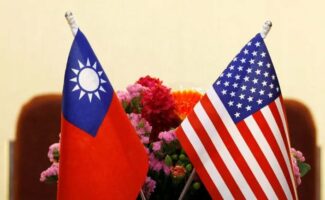
Yahoo News Taiwan and other Taiwanese outlets, regarding the CHIPS and Science
EE TIMES reported that former U.S. President Trump’s deputy secretary of commerce, Keith Krach, one of the architects of the chip bill, said that dozens of companies and their subsidiaries, including SMIC and Yangtze River Storage, pose a serious national threat to the United States. A security threat because they make semiconductors for the military.